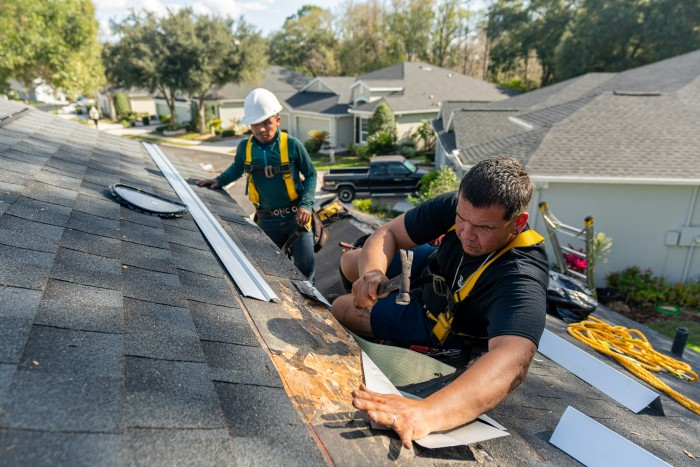
Fall is the time to winterize your roof and prevent ice dams. Here is what every Central Kentucky homeowner should do before the cold weather arrives.
Why Fall Is the Time to Winterize
Kentucky winters may not be as harsh as what you see up north, but our freeze-thaw cycles, ice storms, and occasional heavy snow are hard on roofs. The trouble is that small roof problems that are harmless in summer can become serious in winter, when ice and freezing temperatures turn minor leaks into major water damage.
Fall is the window to get your roof ready. The weather is still mild, the ground is dry, and contractors can work safely. By the time the first hard freeze arrives, it is too late for most repairs. Here is what to do before winter.
Clean Your Gutters One More Time
Clogged gutters are the leading cause of ice dams. When leaves and debris block the flow of water, melting snow has nowhere to go. It pools along the roofline, refreezes overnight, and forms an ice dam that forces water back up under your shingles and into your home.
After the leaves have fallen but before the first freeze, have your gutters cleaned out completely. Check that downspouts are clear and that water flows away from your foundation. If your gutters are old, sagging, or damaged, fall is the time to repair or replace them.
What Ice Dams Are and Why They Are Dangerous
An ice dam is a ridge of ice that forms at the edge of a roof and prevents melting snow from draining off. The water backed up behind the dam can leak under shingles, into the attic, and down into walls and ceilings, causing stains, mold, and structural damage.
Ice dams form when the upper part of your roof is warmer than the lower edge. Heat from your attic melts the snow above, but the colder eaves refreeze that water into ice. The fix is not just on the roof, it is about controlling attic temperature and ventilation.
Improve Attic Insulation and Ventilation
The most effective way to prevent ice dams is to keep your attic cold so the roof surface stays an even temperature. That means warm air from your living space should not be leaking into the attic. Check these items before winter:
- Attic insulation that meets current recommended levels for Kentucky
- No gaps or thin spots where warm air can escape into the attic
- Soffit vents that are unblocked and letting air in
- Ridge or roof vents that let warm air escape
- Bathroom and kitchen exhaust vents routed outside, not into the attic
Inspect and Repair Flashing and Seals
Flashing around chimneys, skylights, and vents is a common spot for winter leaks. Freeze-thaw cycles expand small gaps into big ones, and water finds its way in. Before winter, have a professional check the flashing and sealants around every roof penetration and repair or replace anything that is cracked, loose, or deteriorating.
Check for Missing or Damaged Shingles
Missing or damaged shingles leave the underlayment exposed, and underlayment is not designed to hold up to prolonged winter weather. Replacing a few shingles in the fall is inexpensive and fast. Replacing water damaged decking and drywall in February is not.
Consider a Winter Roof Inspection
A fall inspection is the best way to catch all of these issues at once. Our HAAG Certified inspectors will check your roof, gutters, flashing, and attic insulation and ventilation, and give you a clear picture of what needs attention before winter.
At Crown Roofing, we offer free inspections for homeowners in Lexington, Versailles, Georgetown, Frankfort, and across Central Kentucky. Do not wait until the first ice dam forms. Contact Crown Roofing today to schedule your free fall inspection and get your roof ready for winter.
Crown Roofing
Roofing experts serving Lexington and Central Kentucky